
Introduction
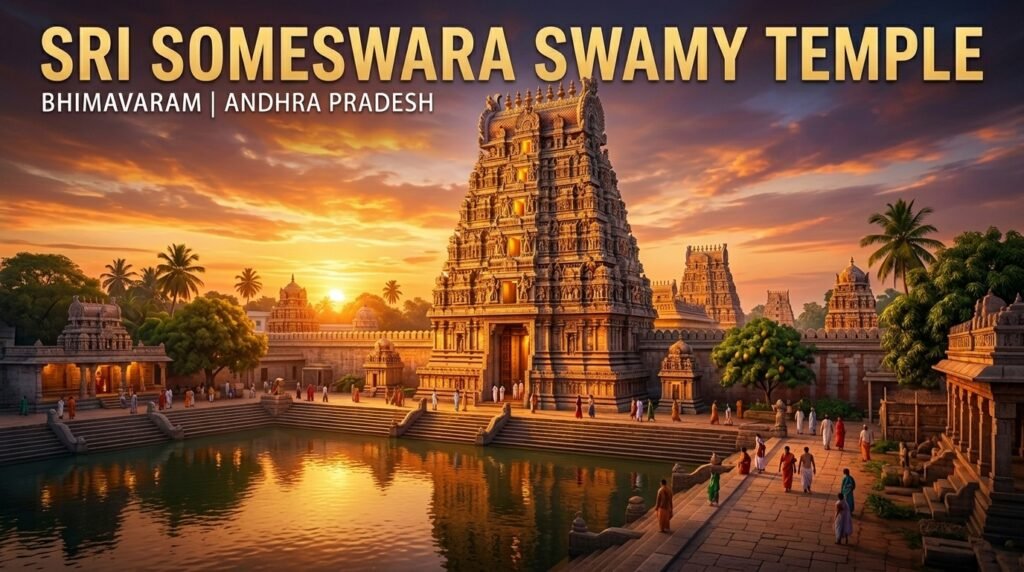
Nestled in the sacred town of Bhimavaram in the West Godavari District of Andhra Pradesh, the Someswara Swamy Temple also known as Somaramam stands as one of the most revered Shiva temples in all of South India. It holds a place of supreme spiritual significance as one of the five Pancharama Kshetras, a group of ancient Shiva temples believed to have been established at spots where pieces of the divine Atma Linga fell to earth. For every devotee of Lord Shiva, a visit to the Someswara Swamy Temple is not just a pilgrimage it is a sacred journey that connects the soul to centuries of faith, mythology, and divine grace.
Whether you are a devout pilgrim seeking blessings or a curious traveler exploring the cultural heritage of Andhra Pradesh, the Someswara Swamy Temple offers an experience that is both spiritually fulfilling and historically enriching. This complete guide covers everything you need to know before you visit.
1.Temple History Sri Someswara Swamy Temple
The Someswara Swamy Temple carries a history that stretches back to ancient mythology and medieval royal patronage. According to Hindu scriptures, the demon king Tharakasura obtained an Atma Linga from Lord Shiva after intense penance. To neutralize his growing power, Lord Vishnu advised Kumara Swamy (son of Lord Shiva) to use his divine Agni weapon to shatter the Atma Linga. The Linga broke into five pieces, each piece attempting to reunite by chanting “Aum.” To prevent this, five divine beings Indra, Surya (Sun), Chandra (Moon), Vishnu, and Kumara Swamy worshipped the five broken pieces at five different sacred locations, and these became the Pancharama Kshetras
At the Bhimavaram location, it is believed that Lord Chandra (the Moon God) installed and worshipped the Shiva Linga to seek redemption for his sins. Because of this divine association, the presiding deity here is known as Someshwara meaning the Lord worshipped by Soma (the Moon God). This is why the temple is also popularly called Somaramam.
One of the most fascinating aspects of the Plan your visit to Someswara Swamy Temple is the miraculous Shiva Lingam inside the sanctum sanctorum. Devotees and priests have observed that the Lingam changes colour based on the lunar cycle it appears pure white on Purnima (Full Moon day) and turns deep brown or black on Amavasya (New Moon day). This incredible phenomenon adds to the mystical aura of the temple.
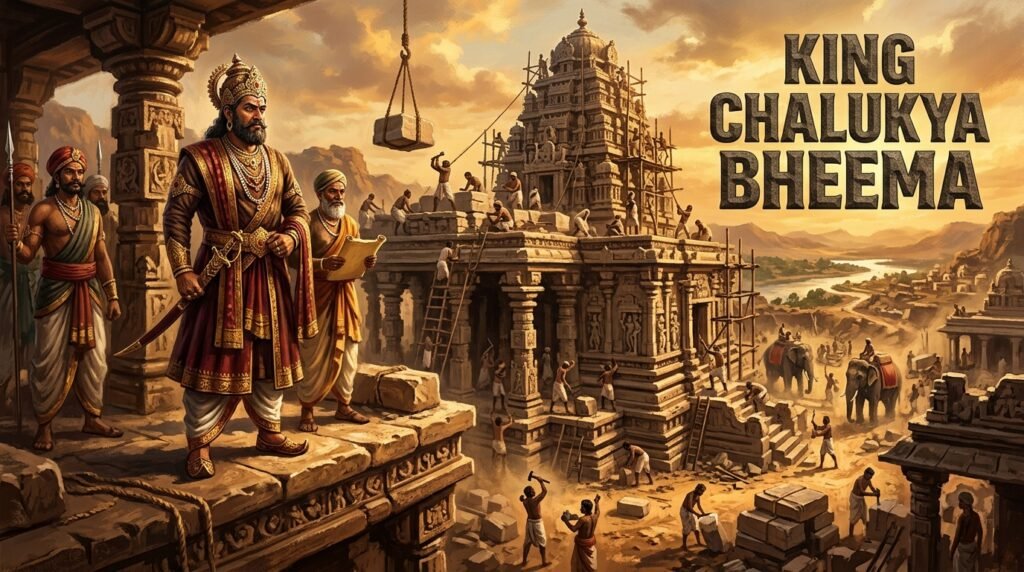
While the mythological roots are ancient, the main structural contribution to the temple is attributed to King Chalukya Bheema I during the 10th century AD. The temple was originally believed to have been established around the 3rd century AD. Over the centuries, successive rulers and patrons have contributed to its expansion and beautification making it the magnificent complex it is today.
Whether you come to seek divine blessings, to witness the grandeur of Maha Shivaratri, to explore the rich Chalukyan architecture, or simply to find peace by the lotus-filled temple tank, the Someswara Swamy Temple will never disappoint. Every stone, every prayer, every lamp lit before the Lingam carries with it centuries of devotion.
The other four Pancharama Kshetras are
2.Things to Cover (What to See Inside)
The Someswara Swamy Temple complex is a treasure trove of divine architecture and sacred shrines. Here is what you must not miss during your visit
Main Sanctum (Garbhagriha): The main shrine houses the sacred Someswara Lingam, which is set 5 feet below the ground level. Devotees descend to offer prayers to the deity, making this a uniquely spiritual experience.
Goddess Annapurna: Uniquely, a shrine to Goddess Annapurna is located on the first floor, positioned above the Shiva Lingam. This exceptional architectural feature symbolises Lord Shiva holding Goddess Ganga on his head a rare and beautiful concept rendered in stone.
Goddess Parvathi (Raja Rajeswari Ammavaru): A separate shrine for the divine consort of Lord Shiva is located close to the main temple, where devotees seek blessings from the Goddess.
Chandra Pushkarini (Chandrakundam): A sacred temple tank located opposite the main temple, always adorned with blooming lotus flowers. Devotees take a holy dip here before darshan. This tank is closely linked to the Moon God’s worship.
Five Nandi Statues: The temple grounds are home to five large Nandi (sacred bull) figures, each guarding the divine space.
Subsidiary Shrines: The complex also includes shrines for Lord Ganesha, Kumara Swamy, Navagraha (nine planetary deities), Sun God, Lord Hanuman, and Lord Sri Rama.
15-Metre Pillar (Dwajasthambham): A magnificent 15-metre-tall pillar stands before the entrance gopuram, a hallmark of Dravidian temple architecture.
The temple faces east and is built across two levels within a walled enclosure. The architectural style reflects a beautiful blend of Chalukyan and Dravidian traditions.
3.Dress Code for Someswara Swamy Temple
When visiting the Someswara Swamy Temple it is important to dress modestly and respectfully in keeping with the sanctity of the place
Temple Dress Code
Men: Wear traditional attire such as a dhoti (veshti) or pants with a formal shirt. Sleeveless vests and shorts are not permitted.
Women: Sarees, salwar kameez, or traditional Indian clothing that covers the shoulders and legs are recommended. Short or revealing clothing is not allowed.
Footwear: Must be removed before entering the temple premises.
Head Covering: Optional, but considered respectful by many devotees.
Festivals & Poojas: White or light-coloured traditional clothing is commonly preferred.
Dressing respectfully honours the sacred space and enhances your spiritual experience.
4.Daily Poojas at Someswara Swamy Temple
The Someswara Swamy Temple conducts a rich schedule of daily poojas that devotees can participate in or witness:
Suprabhatam (Morning Awakening): The deity is awakened with Vedic hymns at the break of dawn.
Abhishekam (Sacred Bath): The Someswara Lingam is bathed with panchamruta (milk, curd, honey, ghee, and sugar), followed by water, bilwa leaves, and flower offerings. Devotees can book special Abhishekam slots.
Archana: Personal archana (floral offering with name and star/gothra chanting) is available for devotees throughout the day.
Neivedhyam (Food Offering): Offerings of cooked food are presented to the deity at designated times during the day.
Dhupa Seva: Incense offering performed with prayers and music.
Deeparadhana (Lamp Worship): One of the most visually beautiful rituals, conducted in the evening with multiple oil lamps illuminating the entire sanctum.
Ekantha Seva (Night Service): The final ritual of the day where the deity is offered rest for the night.
Devotees are strongly encouraged to participate in the morning Abhishekam for the most spiritually immersive experience.
5. Festivals & Jaatra at Sri Someswara Swamy Temple
The Someswara Swamy Temple comes alive during its grand festivals, which draw thousands of devotees from across Andhra Pradesh and beyond
Maha Shivaratri: The most celebrated festival at the temple, held in February or March. Devotees observe all-night vigils, chant Lord Shiva’s name continuously, and witness special Abhishekams performed at each of the four praharas (three-hour intervals) through the night. The atmosphere during Shivaratri is electrifying with devotion.
Sri Swamy Vari Kalyanam (Brahmotsavam): This grand annual festival celebrates the divine wedding of Lord Someswara and Goddess Parvathi. The elaborate rituals, processions, and decorations during this event are a visual and spiritual spectacle.
Sarannavarathri (Navaratri): Celebrated in September or October, this nine-night festival honours Goddess Raja Rajeswari Ammavaru with special decorations (alankaras) on each evening.
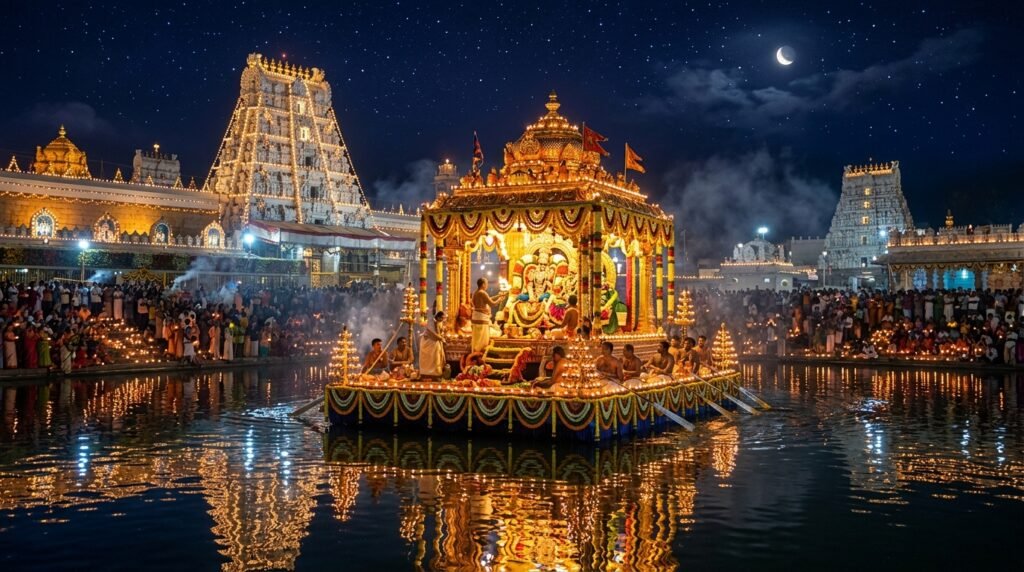
Ksheerabdi Dwadasi Teppotsavam: A stunning float festival where the deity is placed on a decorated float in the Chandrakundam, offering a truly breathtaking visual experience to all gathered devotees.
Vysakha Suddha Ekadasi: Special pooja services are conducted on this auspicious Ekadasi day.
Kartheeka Masam (November):The entire temple complex glows magnificently with countless oil lamps throughout the month of Kartheeka, creating a magical divine ambience that devotees travel far to witness.
Pournami (Full Moon Days): These days hold special significance as the Shiva Lingam turns pure white, and special poojas are conducted to celebrate the divine phenomenon.
6.Someswara Swamy Temple Opening Hours
The Someswara Swamy Temple is open to devotees daily throughout the year
Note: During major festivals such as Maha Shivaratri, Sri Swamy Vari Kalyanam, and Kartheeka Masam, the temple extends its hours significantly to accommodate the large influx of devotees. It is advisable to check with the temple office for exact timings during festival seasons, as they may vary.
The best time to visit the Someswara Swamy Temple is early morning, ideally before 8:00 AM to experience the serenity of morning Abhishekam and avoid the afternoon crowds.
7. Where to Stay Near Someswara Swamy Temple
For devotees and pilgrims planning an overnight or extended stay near the Someswara Swamy Temple there are several comfortable accommodation options available in and around Bhimavaram
Temple Guesthouses / Choultries: The temple trust manages rooms and halls for pilgrims at very reasonable rates. These are basic, clean facilities suited for devotees. Online booking services are also available through the temple administration.
Budget Hotels in Bhimavaram: Several budget-friendly hotels are available within 1–3 km of the temple, offering clean rooms with basic amenities for around ₹500–₹1500 per night.
Mid-range Hotels: Mid-range properties in Bhimavaram town offer air-conditioned rooms with attached bathrooms, restaurants, and room service, suitable for families.
Dharamshalas: A number of dharamshalas (pilgrim rest houses) operated by religious trusts provide free or nominal-cost stays for pilgrims, especially during festival seasons.
It is recommended to book accommodation well in advance if you plan to visit during Maha Shivaratri or Brahmotsavam as rooms fill up quickly.
8.Hostels & Stay Options Near Someswara Swamy Temple
For solo travellers, students, or budget-conscious pilgrims visiting the Someswara Swamy Temple the following options are worth considering
Pilgrim Dormitories (Temple Trust): The temple trust runs dormitory-style accommodation with shared facilities at very low costs, ideal for solo pilgrims.
Youth Hostels in Bhimavaram: There are basic hostel facilities in Bhimavaram town that offer dormitory beds at affordable rates, suitable for backpackers and youth travellers.
Private Paying Guest Houses: Many local families in Bhimavaram offer paying guest accommodations at budget-friendly prices, providing a homely experience with local meals.
For bookings, it is best to contact the temple office directly at Somaramam, Bhimavaram, West Godavari District, Andhra Pradesh.
9.Temples Around Rajahmundry to See
The Godavari region surrounding Rajahmundry is often called the spiritual heartland of Andhra Pradesh. If you are visiting the Someswara Swamy Temple you should plan to explore these magnificent temples nearby
1. Draksharama Temple (Sri Bhimeshwara Swamy Temple) – One of the five Pancharama Kshetras, located near Kakinada (~30 km from Rajahmundry). A grand and ancient Shiva temple of immense historical importance.
2. Sri Veerabhadra Swamy Temple, Pattisam – Located ~35 km from Rajahmundry on Devakuta Hill in the middle of the River Godavari, this stunning Chola-era temple is considered one of the Panchakasi Kshetras.
3. Sri Venkateshwara Swamy Temple, Dwaraka Tirumala – Known as “Chinna Tirupati,” this sacred Vishnu temple (~73 km from Rajahmundry) sits atop Seshachala Hill and is considered equally sacred to the famous Tirupati Tirumala.
4. Sri Ksheera Rama Temple, Palakollu – Another of the Pancharama Kshetras (~22 km from Bhimavaram), where the Shiva Lingam was installed by Lord Vishnu himself.
5. Ryali Temple (Sri Jagan Mohini Keshava Swamy Temple) – A highly unique Vishnu temple in a small village in East Godavari District, famous for its extraordinary deity form.
6. Annavaram Temple (Sri Satyanarayana Swamy Temple)– Located on Ratnagiri Hills (~95 km from Rajahmundry), this magnificent Vishnu temple dedicated to Lord Veera Venkata Satyanarayana Swamy is one of the most visited temples in AP.
7. Kotipalli Someswara Swamy Temple – Another Sri Someswara Swamy Temple located on the banks of the Godavari River, ~60 km from Rajahmundry. Known for the sacred Gowthami River ghats and the purifying holy dip.
8. Sri Markandeya Temple, Rajahmundry Town – An ancient Shiva temple in the heart of Rajahmundry city with a fascinating history dating back to 1818.
10. How to Reach Sri Someswara Swamy Temple in Bhimavaram
🚗 By Road
Bhimavaram is well connected by road. It is about 76 km from Rajahmundry, 117 km from Vijayawada, and 116 km from Kakinada. Regular APSRTC and private buses are available from major cities.
🚆 By Train
The nearest stations are Bhimavaram Town and Bhimavaram Junction. The temple is only 1.2 km away and can be reached easily by auto or taxi.
✈️ By Air
Rajamahendravaram Airport is about 76 km away, while Vijayawada International Airport is around 117 km away. Taxis and buses are available from both airports.
🛺 Local Transport
The temple is centrally located in Bhimavaram. Auto-rickshaws, e-rickshaws, and taxis are readily available for easy local travel.
Conclusion
The Someswara Swamy Temple in Bhimavaram is far more than a place of worship it is a living testament to India’s profound spiritual heritage, ancient mythology, and architectural brilliance. As one of the sacred Pancharama Kshetras, it holds a place of unparalleled reverence in the hearts of Lord Shiva’s devotees. The miraculous colour-changing Shiva Lingam, the sacred Chandra Pushkarini, the grand festivals, and the deeply moving daily rituals together create an atmosphere that touches the soul and stirs the heart.
Plan your visit today. Dress with reverence, arrive early, participate in the morning Abhishekam and experience the timeless grace of Lord Someswara for yourself. As the ancient scriptures say, darshan at each of the Pancharama Kshetras washes away all sins and leads the devotee toward moksha. The Someswara Swamy Temple is your divine gateway to that eternal journey.